
The Softer Side of Child Training We have seen the rewards of positive conditioning as we have gotten in the habit of having daily “training sessions” with our children. These can be as short as five minutes or as long as 20 minutes. During training time, we practice the desired response for certain commands that are associated with commonplace events and activities such as, line up, get coats and shoes, brush your teeth, and sit quietly. We’ve also used this method to condition behaviors that may need only occasional addressing, such as older siblings learning gentleness with a new baby or the children putting coats and shoes away in their proper places. We have fun training in things like cleaning up—the children get to dump a big bin of toys and then “race” to put them away as fast as possible. We’ve also done some amusing role play to train the children how to politely interrupt when two adults are engaged in conversation. In this scenario, Mom played the role of one adult and we pretended that the crying baby was another adult—the children had to stand politely by and wait for a break in the “crying” before saying, “Excuse me, Mom,” and proceeding with their request. They thought it was hilarious! So you can see that training does focus on conforming behaviors, but also should be engaging, and even enjoyable, for the children when possible. The benefit of these anticipatory training sessions is that the children are being conditioned to obey our commands, though they may lack an immediate purpose. We conduct this type of training at a quiet time when we can all focus on expectations and proper behaviors—before circumstances force us to deal with disobedience, dawdling, or misunderstanding at a time when it is inconvenient or we feel pressured. This helps to maintain a positive tone in training, and we find that our instruction is very well received in this environment. Compare this proactive training with the “drill and practice” methodology used by any sporting coach. Players commit to consistent practice, wherein they engage in physical fitness and endurance activities. They also learn and rehearse various game plays to ensure their understanding and mastery of the necessary knowledge and skills. Drill and practice is what prepares athletes for “the big game”; the coach doesn’t wait until his team is on the field to tell them what he expects them to do during play. Another “conditioning” element of training that has been very beneficial for us is the establishment of routines and order by way of scheduling (for feedings, naps, and social times versus independent play). This structure is valuable even for infants, and it also provides boundaries and security for children as they age. We have seen that this beginning conditioning, in its various forms, is of utmost importance in the overall success of child training because it positions the adult as an authority, rather than allowing the child’s whims to rule every circumstance. As a result, the child comes to learn that we are in control and yet have his best interest in mind. Ultimately, a child who respects his parents is more likely to embrace the values that they value and adopt them as his own during the more formal, instructional phase of training. Copyright © 2007-2011, Marc and Cynthia Carrier
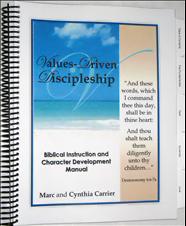
A comprehensive, easy-to-read-and-apply parenting guide.
Cynthia Carrier is the homeschooling mom of eight children and author of several books. She has been a popular speaker at homeschool conventions and other events. The focus of Marc and Cindy's "Values-Driven" ministry is to encourage and equip Christian families to make the most of every opportunity: that is, to serve God, participate in fulfilling the Great Commission, and raise children who love and serve the Lord. For more information about their resources, for fresh inspiration on your family journey, or to find practical helps-including many FREE DOWNLOADS-visit http://www.ValuesDrivenFamily.com. |



|
|

|
$10 for 12 MP3 audios! |

|
Article Spotlight: Home Management: One-Size-Fits-All
Frugality? << more articles >> |






All content copyright © 2008-2011, Marc and Cynthia Carrier and Values-Driven®.